Is the GPU Still Essential? What Could Actually Replace Nvidia's Silicon - and When
🧮 Is the GPU Still Essential? What Could Actually Replace Nvidia’s Silicon — and When
Welcome back, everyone! 📊 I'm your Quant Analyst, filtering out market noise using data, statistical modeling, and systematic insights. 👩💻✨
Nvidia reported yesterday, and the numbers make the “is the GPU still important?” question sound almost silly. But it isn’t a silly question — it is just badly posed, and the bad posing is why most answers to it are useless.
My position, stated plainly: the GPU is not one product, it is three different jobs, and substitution is already well advanced in one of them while barely started in another. Asking whether “something will replace the GPU” produces mush. Asking which job gets taken first, and what has to be true for it to happen produces an answer you can actually watch for.
And the deciding variable is not speed. It is fungibility — whether the silicon can be pointed at a different workload next year. I’ll show the arithmetic on that below.
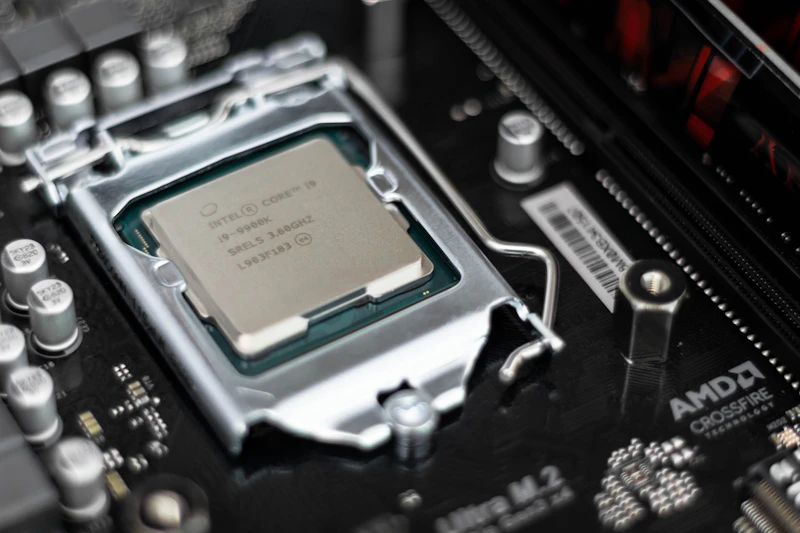
▲ The competitive question is not which chip is fastest, but which one your software can afford to leave
📌 First, the reported numbers
This is anchored to the quarter Nvidia reported on August 26, 2026. In Q2 FY2027 (quarter ended July 26, 2026), revenue was $96.2 billion, up 106% year over year, with Data Center revenue of $89.0 billion, up 117%. GAAP and non-GAAP gross margins were both 75.0%, and GAAP EPS was $2.46. Guidance for Q3 FY2027 is revenue of $108.0 billion ±2% with gross margin of 74.0% ±50bp.
Source: NVIDIA, Financial Results for Second Quarter Fiscal 2027.
1. A Note on My Own Call, Because It Just Moved
Two days ago I wrote that the most informative line in Nvidia’s release was that the company was guiding margin flat rather than stepping it down, and that a supplier holding its margin guide steady while capacity expands is behaving like one with a moat rather than one renting a shortage.
That signal has now moved, slightly. Q3 guidance takes gross margin from 75.0% to 74.0% — the first guided step-down in this stretch. Intellectual honesty requires me to say that out loud rather than quietly drop the criterion I named.
It also requires me to size it correctly. Using the margin-offset arithmetic from that same post: holding gross profit flat through a 75% → 74% move requires revenue growth of 1.4%. Guided revenue growth is $96.2B → $108.0B, or 12.2% in a single quarter. The margin concession is absorbed roughly nine times over. So the honest read is not “the moat is cracking” and not “nothing happened” — it is that pricing power is being traded for volume at a ratio that is, for now, overwhelmingly favourable.
2. The GPU Is Three Jobs, Not One
Here is the reframe that makes the substitution question tractable. Lump them together and you get a shouting match; separate them and the answer is almost boring.
- Frontier training — barely contested. Training a leading model is a capability purchase: you buy the best available because a better model is worth far more than the hardware. It also demands enormous coherent scale, which makes the interconnect (not the chip) the binding constraint, and it demands software maturity because researchers change their minds weekly. Custom silicon is not seriously competing here, and I do not expect it to soon.
- Production inference — actively being taken. This is an operating expense, forever, and the buying criterion collapses to cost per token at acceptable quality. That is precisely the environment fixed-function silicon is built for. Every large buyer already has an in-house program — Google’s TPUs, Amazon’s Trainium and Inferentia, Meta’s MTIA, Microsoft’s Maia — and none of them needs to beat a top-end GPU to matter. They need to be good enough at one high-volume workload to change a negotiation.
- Edge and on-device — never was GPU territory. Phone and laptop NPUs took this years ago. It is a large market and mostly irrelevant to the Nvidia thesis, which is worth saying because headlines about “AI chips” frequently conflate it with the data-centre fight.
So “will something replace the GPU?” already has an answer: something is replacing part of it, and has been for a while. The contested dollar is the inference dollar. The training dollar is not really in play yet.
3. Why Fungibility, Not Speed, Decides It
This is the part I think most coverage gets wrong. A fixed-function chip beats a general-purpose one on the workload it was designed for — that is the whole point of designing it. So why does anyone still buy the general-purpose part?
Because a GPU that is 20% slower at today’s workload can be pointed at next year’s workload, and an ASIC taped out for a specific architecture cannot. That optionality has a price, and you can put a number on it. A buyer should switch only when the cost advantage clears the risk of being stranded:
Required discount ≈ (probability the workload shifts × value stranded) + porting cost
Assume being stranded costs 40% of the asset’s remaining value, and that porting and validating the software stack costs about 5% of total cost of ownership. Then the discount an alternative must offer looks like this:
The Switching Bar
*Illustrative — shows the mechanism, not a forecast. X axis is the chance the workload shifts inside the depreciation window; assumes 40% of value stranded if it does, plus a 5% software porting cost.
Read the two ends of that line, because they explain the split in section 2 exactly.
For production inference, the probability of a disruptive shift is low. A model already in production serves the same shapes for years; the workload is stable by definition. At a 5–10% chance of disruption the alternative only needs to be about 7–9% cheaper to win — a bar that in-house silicon clears comfortably, especially when the buyer also captures the margin the supplier was charging. That is why inference is where displacement is actually happening.
For frontier training, the probability is high. Architectures, attention mechanisms and precision formats are all still moving. At a 40% chance of a shift inside the depreciation window the alternative needs to be over 20% cheaper just to break even — and it has to be that much cheaper on a workload nobody can specify yet. That is a very hard bet to underwrite, which is why the training fleet stays general-purpose.
The uncomfortable implication for the bull case: the day model architectures stabilise is the day this arithmetic turns. Nvidia’s deepest protection right now is not CUDA and not the interconnect — it is that the field keeps changing its mind. That protection erodes on its own if AI research matures, with no competitor having to do anything clever.
4. The Contenders, and What Each Is Actually Aiming At
| Challenger | Job it targets | Honest status |
|---|---|---|
| Hyperscaler custom ASICs TPU, Trainium, MTIA, Maia |
Internal inference, some training | Real and shipping. The genuine competitive pressure, and it comes from Nvidia’s own largest customers. |
| AMD Instinct | The same job, as a second source | A GPU alternative, not a GPU replacement. Matters for pricing leverage; does not change the architecture question. |
| Inference specialists wafer-scale and deterministic-latency designs |
Low-latency serving | Technically credible on their niche. Constrained by scale, memory capacity and the software ecosystem rather than by raw speed. |
| Photonic / analog / neuromorphic | Everything, eventually | Research stage. Interesting, and not an investment thesis on any horizon a portfolio should be positioned for today. |
Notice that the credible challengers are almost all pointed at the same job — and that the most dangerous one is not a rival vendor at all, but a customer deciding to build its own.
5. What Would Change My Mind
- A hyperscaler quantifying its in-house share. The moment one of them puts a number on what fraction of inference runs on its own silicon, substitution stops being theoretical and starts being measurable. Watch the segment disclosures, not the keynote slides.
- Guided gross margin stepping down twice more. One point traded for 12% volume growth is a good trade. Three points with decelerating revenue would be a different animal entirely — that is the corner where margin and volume move together, which is the scenario that actually hurts.
- Model architectures visibly stabilising. Counter-intuitively, a boring year in AI research is bearish for the incumbent, because it collapses the fungibility premium the whole thesis rests on.
- A serious training-scale deployment on non-Nvidia silicon. Not a benchmark or a press release — a frontier model actually trained end-to-end elsewhere. That would invalidate the “training is not in play” half of my argument outright.
Quick FAQ
Q. So is the GPU still important?
Yes, and the last quarter is not a subtle answer: Data Center revenue of $89.0 billion, up 117%. But “important” and “uncontested” are different claims, and the second one is the one that matters for the multiple.
Q. Will custom chips kill Nvidia?
Almost certainly not as a company, and quite possibly yes as a monopolist on inference. Those two statements are compatible, and holding both at once is most of what good analysis is here.
Q. Should I be buying or selling on this?
I can’t answer that for your portfolio and I’m not licensed to. What I can say is that the useful question is not “is the technology safe?” but “what is priced in?” — a company can keep every technical advantage it has and still be a poor investment at the wrong multiple. Decide your invalidation level first, then size so being wrong is survivable.
💡 Quant Strategy & Takeaways
The GPU is not being replaced; its monopoly on inference is being chipped away, while the training fleet stays general-purpose because nobody can yet specify what next year’s workload looks like. Fungibility is the moat, not speed.
So watch for the boring signal, not the dramatic one: stable architectures, not a faster competitor, are what turn this arithmetic. 🤖
Where do you think the first real crack shows up — inference share, or a training run somewhere unexpected? Tell me in the comments. 📈✨
Disclaimer: This article is quantitative research published for informational and educational purposes only. It is not financial advice or a recommendation to buy or sell any security, and the switching-cost model shown is illustrative reasoning rather than a forecast.

Comments
Post a Comment