Why I Decided to Become a Quant in College: From Gut Feelings to Systematic Data
🧠 Why I Decided to Become a Quant During My College Days
Today, I manage quantitative models and data infrastructure professionally. However, I didn’t wake up one morning in college with a grand epiphany saying, "I must become a Quantitative Analyst."
In fact, my journey began in a somewhat ambiguous gray zone between finance and computer science. Like many college students, I was fascinated by the stock market. I spent hours reading economic news, tracking earnings reports, and trying to understand why certain equities surged while others crashed unexpectedly. But over time, one uncomfortable question kept lingering in my mind:
"No matter how many hours I spend analyzing this company, am I ultimately just rationalizing a gut feeling?"
That single realization changed everything.
1. The Frustration with Narrative-Driven Investing
When you study retail stock market analysis, you are bombarded with subjective narratives:
- "This company has massive secular growth potential."
- "The technical chart pattern looks extremely bullish."
- "At this price-to-earnings multiple, the stock is deeply undervalued."
At first, these stories sounded convincing. But the deeper I dug, the more confused I became. Two respected market commentators could look at the exact same balance sheet and reach completely opposite conclusions—one screaming BUY, the other shouting SELL.
I realized I needed a ground truth. Instead of trusting subjective opinions, I began looking directly at the raw numbers. I started collecting historical market data and backtesting investment logic:
- If I had bought stocks under these exact conditions in the past, would I have actually generated positive alpha?
- How does this strategy hold up over a 10-year horizon compared to a 1-year bull run?
- Do famous Wall Street "rules of thumb" actually survive empirical data validation?
Hypothesis testing quickly became my passion. What I loved most was simple: I could objectively validate my ideas using data.
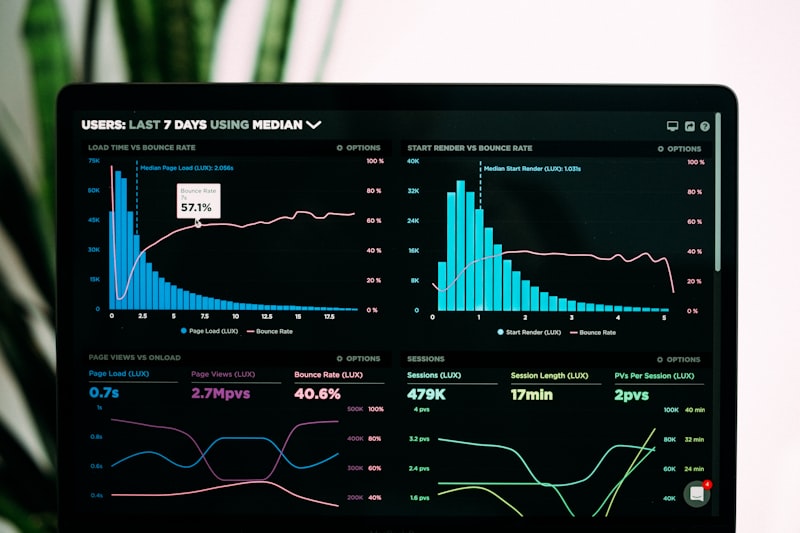
▲ Replacing market noise with empirical backtests and data validation
2. Testing Investment Hypotheses with Code
Since I was studying computer science and statistics alongside finance, leveraging code felt natural. I wrote basic Python scripts to pull historical price series, define entry/exit rules, and evaluate historical performance.
The initial backtest results were eye-opening. Strategies that felt "intuitively bulletproof" in my head often performed horribly on historical data due to transaction costs, drawdowns, or market regimes. Conversely, surprisingly simple rules sometimes produced robust risk-adjusted returns.
That was my first major paradigm shift: Human intuition is riddled with emotional bias and hindsight fallacy, but code executes logic with objective consistency.
Of course, data isn't a magic crystal ball. If you misuse data, you can easily overfit models to produce whatever optimistic results you desire. Driven to avoid these traps, I dove deep into mathematical statistics, time-series analysis, machine learning algorithms, and quantitative risk management. Naturally, I discovered the global career path known as the Quantitative Analyst (Quant).
3. The "Aha!" Moment: Aligning Passion with Profession
When I first researched what quants actually do, the appeal was immediate. Using mathematics, probability theory, and programming to model financial markets was the exact intersection of everything I enjoyed:
The Quant Intersection:
Financial Markets + Statistical Modeling + Software Engineering + Scientific Method
For the first time in college, I saw a clear alignment: "This isn't just an academic exercise—this is a career path where I can apply scientific curiosity every single day."
4. The Hard Truth: Quants Don't Print "Easy Money"
However, I never assumed becoming a quant was a shortcut to getting rich quick. In fact, rigorous study taught me the exact opposite.
Financial markets are hyper-competitive environments populated by world-class institutions with superior capital, lower execution latency, and massive data pipelines. A backtest that looks profitable on paper guarantees nothing in live trading due to slippage, market impact, and changing volatility regimes.
To me, a true quantitative analyst isn't someone who claims they can predict stock prices with 100% accuracy. Instead, a quant is someone who meticulously formulates hypotheses, quantifies tail risks, accepts empirical errors, and builds systematic frameworks to manage probability when they are wrong.
💡 The Quant Mindset: Curiosity Over Speculation
Looking back, I didn't choose the quantitative path solely for financial gain. I chose it because I loved the scientific process of testing curiosity against data:
Hypothesis Formulation ➔ Data Ingestion ➔ Algorithmic Backtesting ➔ Risk Quantification ➔ Systematic Execution
Final Thoughts
Even today, whenever I encounter a new trading strategy or market narrative, my initial reaction remains unchanged from my college days:
"Is that narrative actually true? Let's check what the data says."
If I hadn't fallen in love with asking that question as a student, I wouldn't be a quant today. Choosing this career wasn't about finding a magic crystal ball for stocks—it was about finding the most disciplined, fascinating way to satisfy my curiosity about how the financial world truly works.
Disclaimer: This personal narrative is strictly for educational and informational purposes. Quantitative backtesting and statistical modeling carry inherent market risks and do not guarantee future performance. Always practice prudent risk management and conduct independent research.

Comments
Post a Comment